The problem
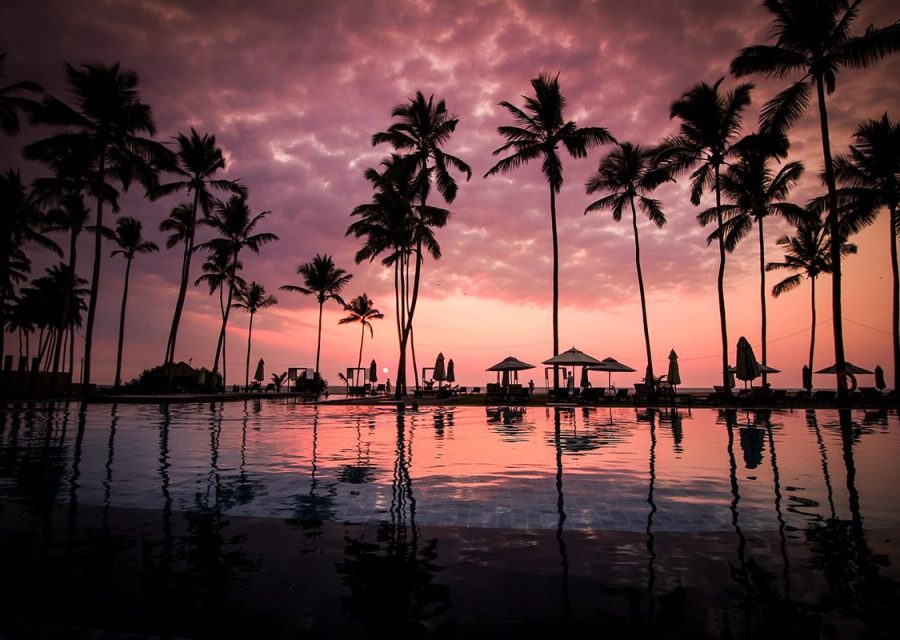
A dark basin is the standard way to make water reflect: kill the bottom, and what you see is the sky. It also absorbs almost everything that lands on it. Our model put a black-rendered 40 mm sheet at 41 °C by mid-afternoon in August, which is a chlorine demand nobody can dose against and a biofilm you can smell from the terrace.
What we changed
Reflection is about the angle you view it from, not the colour underneath. We kept the depth at 40 mm and used a pale honed limestone bottom, then dropped the surround by 300 mm so that everyone approaching the court reads the water at under 12° from the horizontal. Below about 15°, Fresnel reflectance climbs past 60 per cent and the bottom stops mattering. Standing directly over it you can see the stone; from anywhere you actually walk, it is a mirror. Peak measured water temperature in the first August was 29 °C.
Level tolerance is the other half. At 40 mm, a 5 mm error across a 20 m span is a visible dry patch. The basin was poured, surveyed, and ground back to ±2 mm before the stone went down.
Wind, and the honest answer
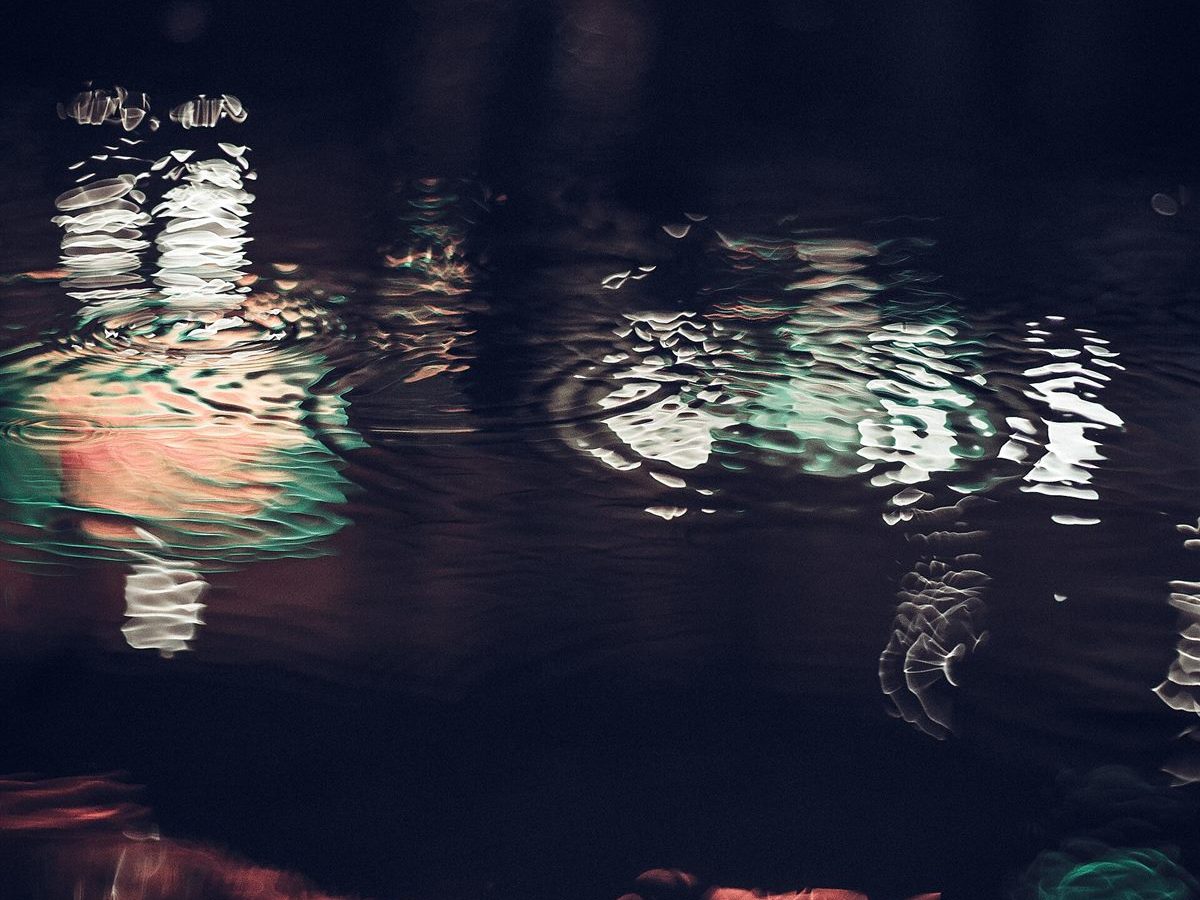
A 40 mm sheet ripples at about 3 m/s and stops being a mirror at 5. The court is enclosed on three sides, and we told the client plainly that on the twelve or so windy afternoons a year it will read as moving water instead. They preferred that to a deeper basin, which would have been steadier and taken four times the volume to heat, chill and treat.